
UPDATE: This article was originally posted on July 10, 2018. It has been updated with new information and tips below.
In 1881, Joseph Wharton started the world’s first collegiate business school. In the more than 100 years since, Wharton has maintained its position as one of the world’s top destinations for talented business professionals.
With numerous opportunities (many of them overseas) to develop your leadership skills and build relationships with fellow students, Wharton offers a highly challenging yet highly collaborative approach to business education.
However, with increasing competition to join this innovative, collaboratively-minded university, it’s more difficult than ever to successfully apply to Wharton.
That’s why we’ve prepared this guide to help you use your Wharton admissions essays to stand out. We’ve rounded up our best tips and links to Wharton MBA sample essays to ensure you give your Haas application your best shot.
1. Who is Wharton looking for?
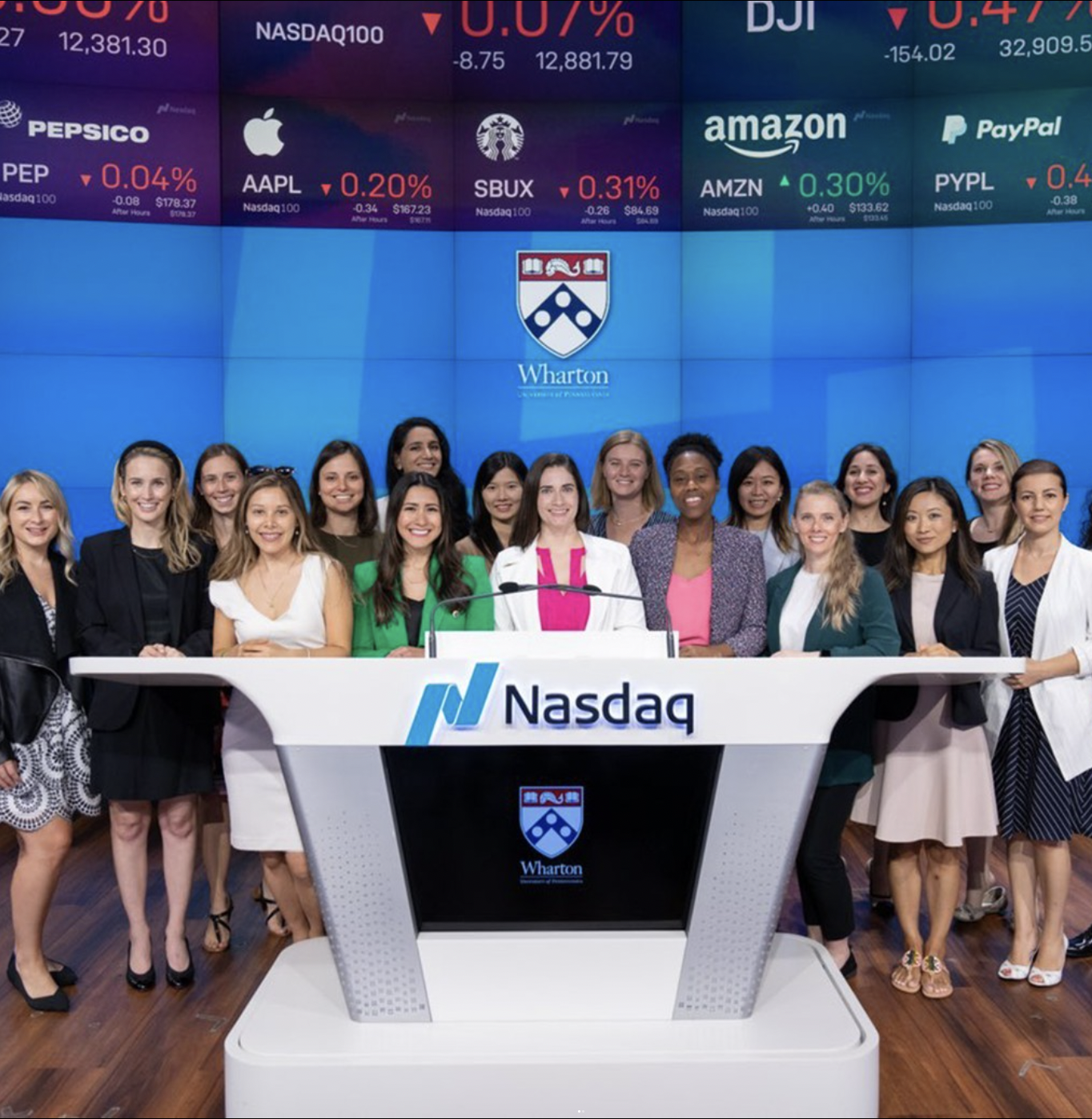 (Photo courtesy of @whartonschool on Instagram)
“Our mission is to develop leaders who act with a deeper understanding of themselves, their organizations, and their communities, and contribute positively to the growth of each.” Wharton Admissions
As one of the most consistently top-ranked business schools, Wharton has become almost synonymous with elite business education. With a strong focus on innovation and their unique Lauder dual-degree program in international studies and Health Care Major, it’s no surprise that Wharton is at the top of many applicants’ lists of dream schools. .
Though often called a “finance factory,” Wharton builds a diverse class each year by looking beyond traditional investment banking professionals to fill its class. In fact, the number of Wharton post-MBA graduates breaking into industries like tech has only increased over the past few years.
Learn more about Wharton’s most recent class profile here.
Beyond the numbers, Wharton tends to value students who demonstrate a collaborative personality, leadership potential, global mindset, and an ability to think outside the box and innovate.
If this sounds like a community in which you’d be right at home, you’ll first have to prove you’ve got what it takes by successfully answering Wharton’s admissions essay questions.
2. How should I answer Wharton essay questions?
2.1. Essay 1: Two short-form questions
What is your immediate post-MBA professional goal? (50 words)
This first question asks for clarity, not creativity.
In just 50 words, your job is to state one specific role, in one specific industry, list a few sample companies you’d like to work for (or, if you’re sponsored, mention you’ll be returning to your company), ideally in one specific geography. Wharton doesn’t want a full story here. Instead, they want to see if you can clearly articulate what you plan to do right after graduation.
You should aim to mirror a LinkedIn headline. For example: “Join a top-tier consulting firm like Bain as an Associate focusing on digital transformation projects in the U.S.” or “Become a Senior Product Manager at Google Health to develop AI-powered solutions for emerging markets.”
There’s no need to explain why, how, or how this connects to your long-term goals. Save that for the next question. Just make sure the role you choose makes sense based on your background, shows logical continuity from your pre-MBA experience, and is consistent with the long-term ambitions you will present. If your long-term goal has nothing to do with the role you name here, you’ll raise red flags.
Additionally, stick with industry-standard job titles that Wharton will recognize, and avoid generic phrases like “leadership role” or “impact-driven position.” This is a test of focus and clarity. Don’t overthink it.
Describe your medium- and long-term professional goals after your Wharton MBA. (150 words)
The second part of this new short-form essay is where you expand on your immediate goal and show how it fits into your broader professional plan.
While the first question is purely about what you’ll do right after Wharton, this question asks you to show progression: how you’ll grow in that role, what next step you’re aiming for after your first few years, and how that growth connects to your longer-term ambitions. Wharton is looking for more than a checklist. They want to see both professional growth and personal motivation behind your choices.
The best way to approach this is to share your “mid-term” goal (it may just be a minor continuation of your short-term goal, like the next level promotion you’d receive) in the first sentence. From there, explain the kind of projects, responsibilities, and skills you hope to take on. Think about leadership growth, exposure to different business areas, or types of challenges you want to tackle.
For example, if your long-term vision is to lead your own health tech startup, explain how working as a Senior Product Manager at Google Health will give you both the technical and leadership skills you’ll need to eventually build and scale your own venture.
The critical next layer is explaining why your goals matter to you and the broader world. For example: “By driving growth strategies for healthtech firms post-MBA, I will develop the skills and insights needed to eventually launch my own startup, helping improve healthcare accessibility in underserved communities.” That kind of sentence shifts your answer from just a professional plan to a purpose-driven narrative that captures the attention of the adcom by emotionally resonating with them.
In your response, be concrete and confident, but don’t get bogged down in excessive detail. Paint a clear, logical arc for a career that shows purpose and direction.
NOTE: You should not mention Why Wharton in this essay. The question last year explicitly asked you to tell the adcom why you wanted to go to Wharton. That has been removed this year.
2.2. Essay 2
Taking into consideration your background – personal, professional, and/or academic – how do you plan to make specific, meaningful contributions to the Wharton community? (350 words)
For this essay, we highly suggest that you focus on multiple examples. In our experience over the years, 3 ways you plan to contribute tends to work best, though we have seen essays with 2 examples and 4 examples work in very special circumstances.
There are many different ways you can contribute to the Wharton community, so many different stories and “lessons” you can apply at Wharton are valid here.
For example, if you have worked extensively as part of an international team, highlighting a specific experience where diversity was the key to “winning the day” and showing how you would promote diversity while at Wharton could work very well.
Or, you might have a specific ability that has proven valuable in analyzing business challenges, might be an outstanding communicator, etc. There really are endless opportunities for this essay.
When telling your stories, make sure to use the STAR method to ensure you clearly demonstrate what happened, your role in the events, and what you learned. Then, link this lesson to specific resources and opportunities at Wharton, showing how you will improve the overall community.
To create an amazing essay, stay focused, do your research on Wharton, and choose your examples wisely. Showing you’re a leader and team player who fully understands the Wharton experience and who is prepared to contribute to the Wharton community is the key to success.
2.3. Reapplicant Essay
Please use this space to share with the Admissions Committee how you have reflected and grown since your previous application and discuss any relevant updates to your candidacy (e.g., changes in your professional life, additional coursework, and extracurricular/volunteer engagements). (250 words)
We have written two extensive posts on how to approach reapplying to business school and on how to handle the reapplicant essay. Make sure to check them out!
2.4. Optional Essay
Please use this space to share any additional information about yourself that cannot be found elsewhere in your application and that you would like to share with the Admissions Committee. This space can also be used to address any extenuating circumstances (e.g., unexplained gaps in work experience, choice of recommenders, inconsistent or questionable academic performance, areas of weakness, etc.) that you would like the Admissions Committee to consider. (500 words)
As with nearly all elite business schools, Wharton does not want to see a summary of your profile or a restatement of why you want to attend Wharton.
However, if you have extenuating circumstances that merit additional explanation (a good overview of what kind of circumstances quality can be found here), make sure to explain them clearly and directly.
Looking for Wharton MBA essay examples?
Check out our real sample essays that got our clients admitted here.

3. Need individualized coaching?
The right consultant makes a massive difference in your application, but finding that person doesn’t have to be complicated. Leland connects you with vetted MBA consultants ranging from former admissions officers to current students to professionals in your target industry, all at different price points. Whether you need one mock interview session, essay feedback, or a complete application package, you can book the exact scope of help that fits your situation.
Their team can also help match you with consultants based on your profile, goals, and the kind of support you’re looking for. Leland has made it easy to find quality coaches without spending weeks researching options.
Check out Leland and find the support you need to get into your top-choice MBA.

We earn a small commission when you book coaching through our link, which helps support the free resources we create.
4. Wharton Deadlines
The deadlines below apply to the 2026-2027 application cycle. You can start your online application here.
Wharton Round 1 Deadlines
Application Deadline: September 8, 2026
Interview Notification: October 28, 2026
Decisions Released: December 17, 2026
Wharton Round 2 Deadlines
Application Deadline: January 5, 2027
Interview Notification: February 19, 2027
Decisions Released: March 31, 2027
Wharton Round 3 Deadlines
Application Deadline: March 31, 2027
Interview Notification: April 16, 2027
Decisions Released: May 11, 2027